The Cheapest Flood Engineers in London Have Tails
For years, heavy rain around Greenford in west London meant water in the wrong places: a flooded Tube approach, soaked streets, homes and commutes disrupted often enough that residents stopped being surprised. Then, for the first time in a decade, a wet winter came and the area stayed dry. The engineers responsible had webbed feet and an appetite for chewing wood.
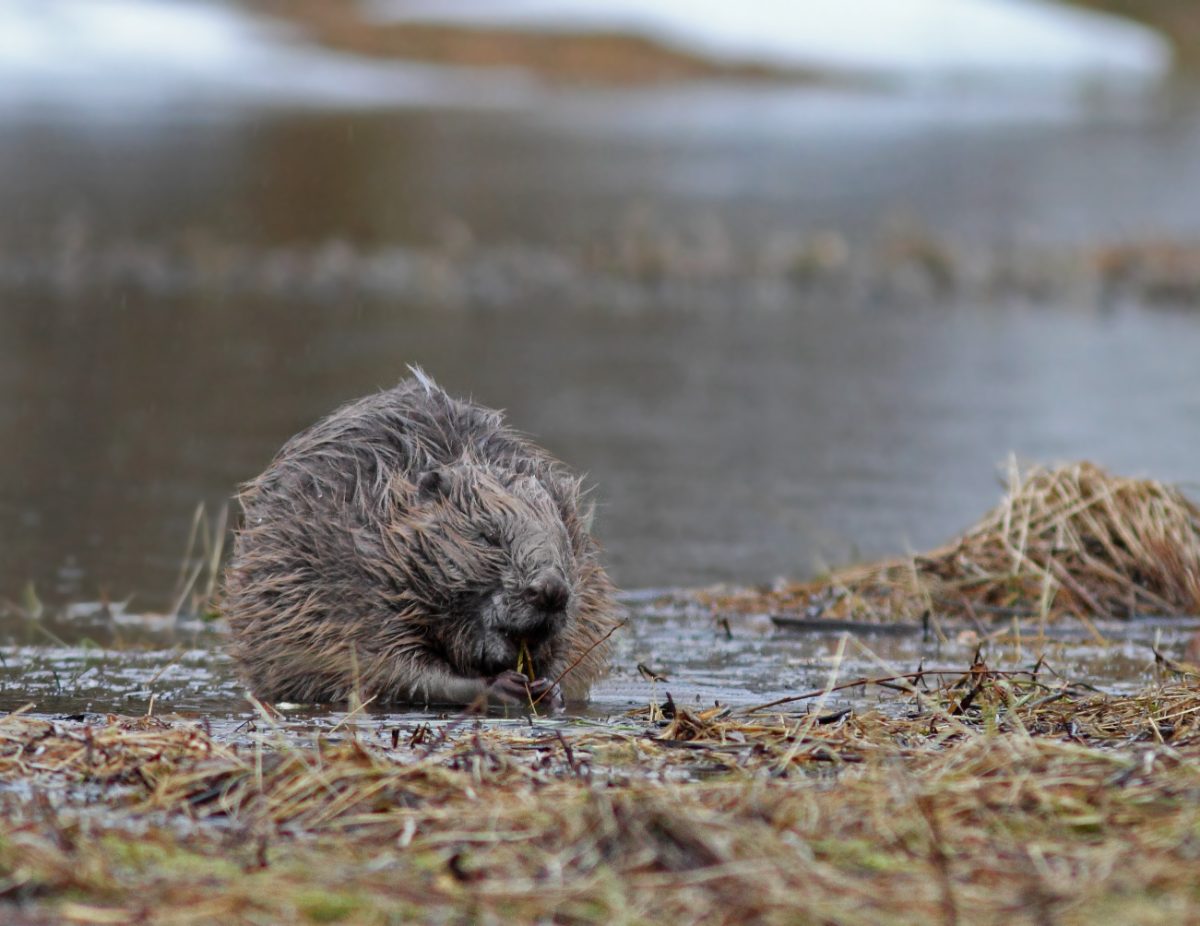
The idea belonged to Sean McCormack, a local vet who kept watching the neighborhood flood and asked a different kind of question. Rather than wait on the expensive drainage works a council would normally commission, why not try a living solution? In 2023, roughly four centuries after beavers were hunted out of England, five of them were released into Paradise Fields, a neglected patch of green in Ealing that had once been a golf course. Nobody had to teach them their trade.
They got to work at once, damming the stream into a chain of pools until the site became something that could hold water instead of shedding it. “They effectively turned this site into a giant sponge that can take heavy rainfall,” McCormack told NPR. The family has grown since, to at least eight, with a fresh litter of kits arriving this spring.
The flooding had reached well past the Tube. As Şeniz Mustafa, the project’s urban beaver officer, describes it, the water hit “people in their houses, going to work, going to school.” David Attenborough, who has watched the wetland take shape, summed up the turnaround: “for the first time in a decade, residential areas downstream have been flood-free.”
Three years after the beavers arrived, Pixar released Hoppers, in which a young woman beams her mind into a robotic beaver to rally the animal kingdom against a mayor eyeing their habitat. It took a studio a talking heroine and a mechanical stand-in to imagine animals reshaping a place on their own terms. Five real ones in Ealing had already done the physical version, with their teeth.
And the flood relief was only half of it. Once there was water and wetland where there had been neither, other creatures moved in: freshwater shrimp, more than a dozen kinds of butterfly, and birds that had not been recorded on the site before. The beavers built the habitat first, and the rest followed. One of their daughters has since been carried off to Wales to start a family of her own.
McCormack sees the whole thing as a small proof of a larger point. “We’re demonstrating here that actually it’s not that wild an idea to live alongside beavers,” he said. In a corner of London with little room left for anything wild, five beavers held back the water, drew in the wildlife, and kept a neighborhood dry, and nobody sent an invoice.