Japan’s New Fireworks Shells Dissolve in a River Within a Day
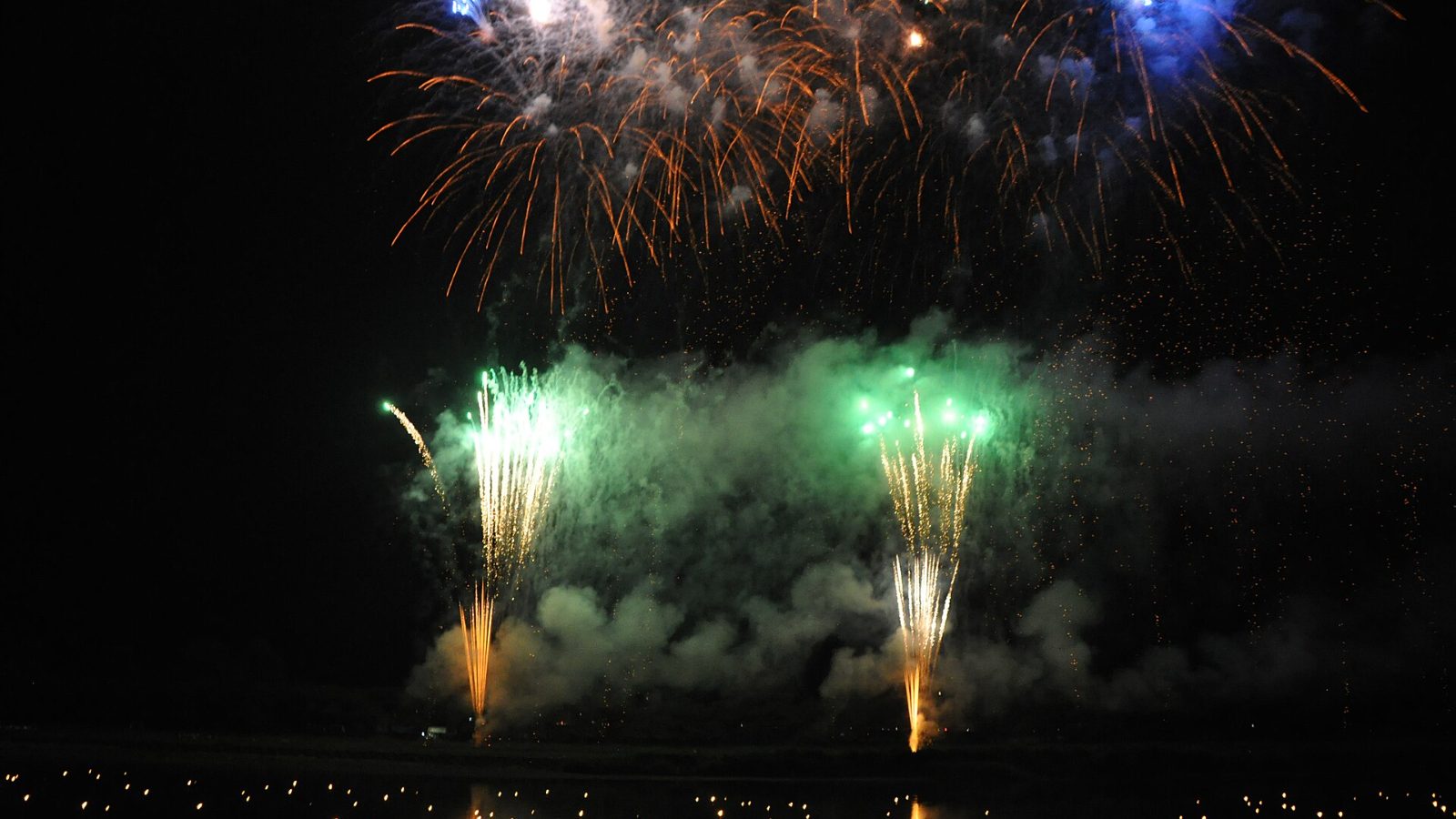
A fireworks show over a river ends in seconds. The gold willows fade, the smoke drifts downstream, and shredded paper and burnt casing settle onto the water, where a conventional shell can take about half a year to break down.
A fireworks company in Shiga Prefecture, Japan, has spent decades on the debris left behind. Working with a university polymer scientist, Kakinoki Fireworks Industry Co has built a shell casing that can dissolve within about a day of getting wet.
The trouble begins with how a shell is made. Inside each “ball,” gunpowder is stacked in layers behind an outer casing, typically kraft paper. When the shell bursts overhead, the casing breaks apart and drops onto whatever is below, ground or water. Across a full season of festivals, those fragments accumulate in the rivers and fields where the shows take place.
The new shell swaps in a water-soluble resin, the same material used to coat agricultural seeds and to condition soil. That resin is biodegradable and breaks down without harming the environment, and it is judged safe for any living creature that ingests it. Moisture is what triggers the change: a fallen casing “becomes soft like heated caramel,” and where water is moving, as in a river, almost all of it can dissolve inside a day. For a standard medium-sized aerial shell, roughly 12 centimeters across, casing that drops one night can be gone by the next when conditions are right.
That water setting is common in Japan, where a great many fireworks displays go up over open water, a broad river, a lake, or the sea, and that is exactly where spent casings used to collect.
Paper has not vanished from the recipe. Kraft paper still wraps each shell to keep moisture out before launch, since a casing built to melt in water should not get damp early. But the paper needed for a standard aerial firework drops from about two A3 sheets to roughly one.
Kakinoki has chased greener fireworks for about 25 years, including efforts to cut the remnants each shell leaves behind. An earlier attempt used a different biodegradable resin, but the company abandoned it after running into problems such as microplastics. The turning point came in 2018, when the firm met Takahiko Nakaoki, a polymer scientist at Ryukoku University, and the two started the collaboration behind this shell. One early snag: the resin was so sticky it clung to the machine that molds the casings, and the team retuned the release agents until the shells peeled off cleanly.
“We want to accelerate the decomposition speed and reduce the environmental burden,” company president Hiroyuki Kakinoki told Kyodo News. He wants that shift at scale: “Of the 20,000 fireworks (we plan to produce this year), I want 10,000 to be eco-friendly ones.”
Half of this year’s run, by Kakinoki’s own goal, is built to break down in the same waters the festivals are held over. The show overhead looks the same. What used to sink and linger now goes with the current.