A Vermont Volunteer Drove Almost Six Hours to Carry a Hummingbird to Safety
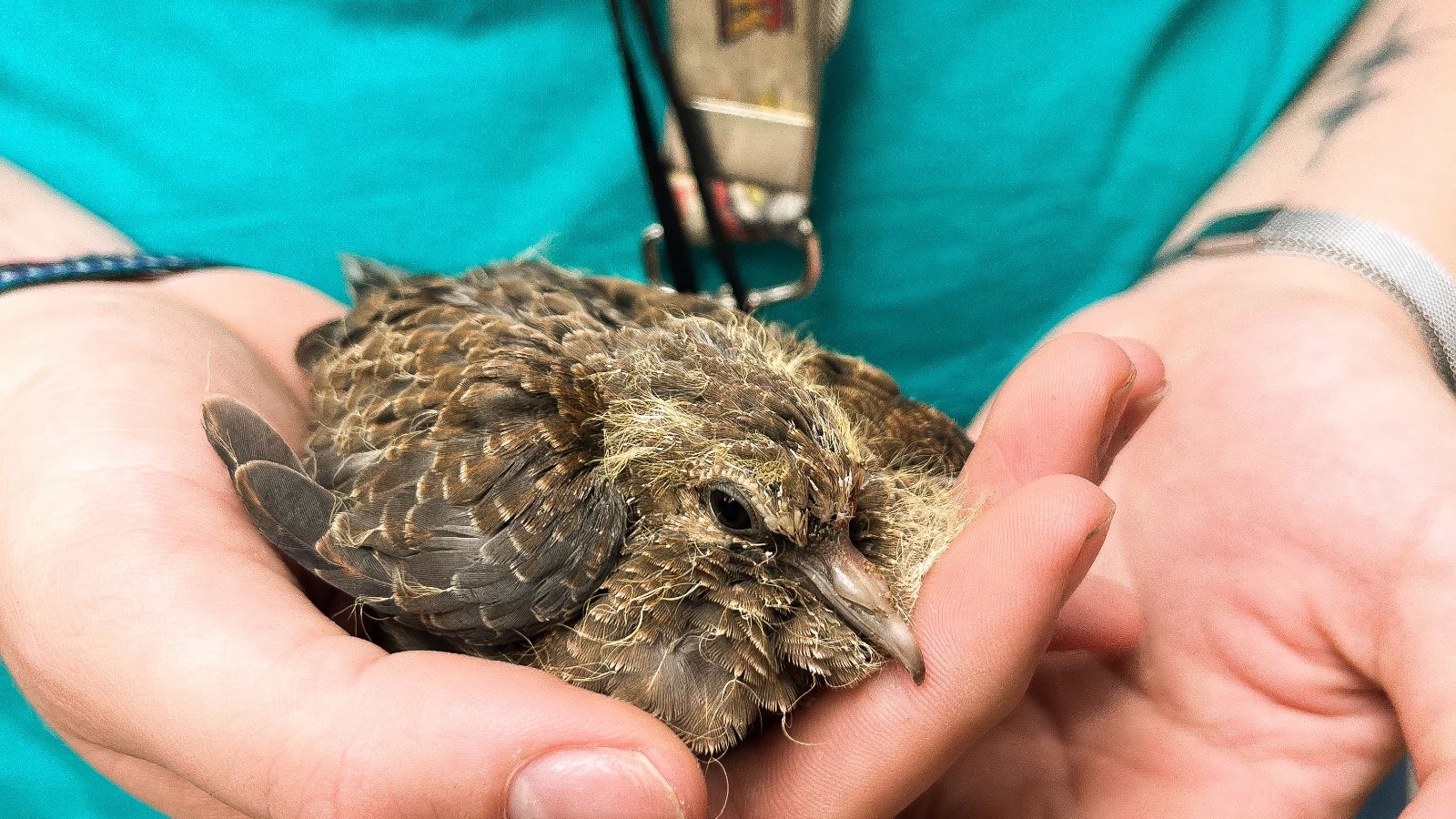
The cargo in Faith Davis’s car has included a clutch of duck eggs kept warm on water bottles, an injured heron she waded a river to reach, and, once, a single hummingbird with a metabolic problem that she drove almost six hours to deliver. Davis works an IT job in Vermont. In her free time she is one of the people a wildlife hospital calls when a bird is running out of time.
She is one of about 100 trained volunteers the Vermont Institute of Natural Science sends out across Vermont, New Hampshire, and eastern upstate New York whenever a report comes in of a hurt bird. Their purpose is narrow and specific: get the bird into a clinic fast enough that it can still be saved. VINS describes them, and the drivers like them around the country, as part of a nationwide corps of avian emergency responders.
Most of the birds are hurt by something people made or did. VINS takes in more than a thousand wild birds a year, many of them hit by cars, sickened by disease spread at feeders, or caught by house pets. More than a billion birds a year die flying into buildings. The transporters exist to cover the gap between the injury and the help, the stretch of road where a bird that survived the first blow can still die before anyone reaches it.
One summer, a juvenile bald eagle came off a power line that had electrocuted it and ended up on the ground. Davis eased it into a covered tote with air holes and started the hour-and-a-half drive to VINS. Partway there, it woke up. “It was very wide awake and very agitated,” she recalls. It arrived burned in places and very much alive, and it was expected to recover.
The work has a craft to it, most of which Davis picked up in online training. Throw a sheet over the bird. Wear gloves and eye protection. Keep it in a dark container with air holes. Above all, keep everything quiet, because stress by itself can kill a bird, especially a small songbird. She keeps old towels and containers of every size ready to go.
For all that care, not every bird makes it. The survival rate for the ones Davis carries is around 40 percent. “But if we didn’t do this,” she says, “it would be much lower.” A bird that pulls through is returned to the same spot it was picked up from, and for long-lived species like raptors, getting recovered birds back can even help the local population grow. “If we didn’t have volunteers, it would be very, very difficult to actually get that bird care,” says Celia Reinhardt, an avian rehabilitator at VINS.
Vermont is not unusual in leaning on people like Davis. Similar networks run from Minnesota to Alabama to Hawaii. In Washington State, Spokane Audubon volunteers logged 5,000 miles in 2023 answering 249 calls. If you ever find a sick or injured bird, the rules are the ones Davis follows: keep it dark, contained, and quiet, resist the urge to check on it, and call a licensed wildlife rehabilitator. Somewhere within driving distance, there may be someone with a trunk full of towels, ready to go.