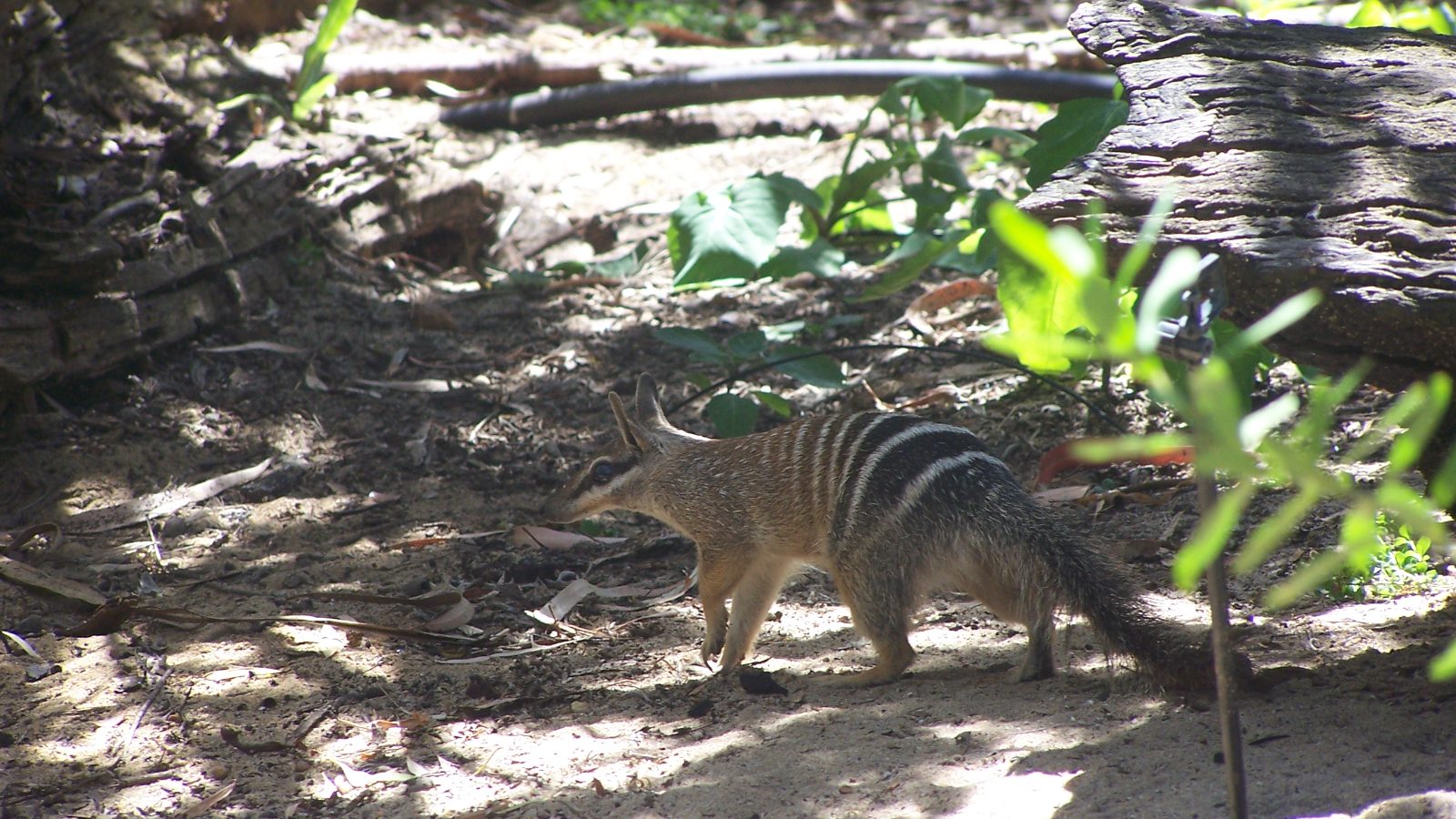
Decades of Predator Control Pulled Western Australia’s Numbat Back From the Brink of Extinction
The numbat is a small striped marsupial about the size of a squirrel, reddish-brown with white bands across its back and a bushy tail. Sometimes called the banded anteater, it hunts termites in daylight, which is unusual for a marsupial, since most are active at night. By the late 1970s, about 300 of them were left in the world.
That made the numbat one of the rarest mammals alive. It had once ranged across southern Australia, but it had little defense against the feral cats and red foxes that spread after European settlement. The predators ate through the population until the animal clung on only in Western Australia, the state that claims it as its faunal emblem.
In its July 2026 update, the IUCN Red List moved the numbat from Endangered to Near Threatened, a step down the ladder of extinction risk. Behind that reclassification is a population now estimated at 2,000 to 3,000 animals.
The recovery took decades and a long roster of people. Research by Dr Tony Friend in the 1980s laid the groundwork, and a formal Recovery Plan followed in 1994. The Western Australian Government and the Australian Wildlife Conservancy then went at the predators directly, baiting foxes and cats and raising fences that feral animals could not cross. Perth Zoo bred numbats in captivity, and conservationists moved young animals into new territory, establishing at least five more self-sustaining populations.
Australian Wildlife Conservancy ecologist Dr Jennifer Anson, a member of the Numbat Recovery Team who helped assess the species for its new status, has seen much of that work firsthand. Over the past quarter century her organization has built four numbat populations inside predator-free fenced areas: at Scotia in far western New South Wales, where 43 founding animals were released into a fenced reserve in 1999; at Yookamurra in South Australia from 2002; at Mt Gibson in the Western Australian Wheatbelt from 2016; and at Mallee Cliffs National Park, with the NSW National Parks and Wildlife Service, from December 2020.
In October 2025, staff at Mallee Cliffs found four juvenile numbats. Young animals born on site mean the fenced population is breeding on its own, without new releases to prop it up.
“It’s great to see that decades of conservation efforts across Australia are paying off, and the Numbat has moved from Endangered to Near Threatened on the IUCN Red List,” Dr Anson said.
The numbat is the last living member of its family, Myrmecobiidae, with no close relatives anywhere. Professor John Woinarski of the IUCN’s marsupial and monotreme specialist group points out that its steady digging for termites opens the soil so rain soaks in instead of running off, which helps keep Australia’s woodlands healthy. As IUCN Director General Dr Grethel Aguilar put it, “nature conservation works, as we are reminded again and again.”
The recovery has clear limits. Today the animal lives on a sliver of its former ground, barely four-hundredths of one percent of where it used to range. Feral cats and foxes remain, and the fences and baiting that keep them out need money and labor every year. Under Australia’s national environmental law, the EPBC Act, the numbat is still listed as Endangered; the change applies to the global Red List, not the domestic one. The same IUCN update declared five Australian marsupials extinct, pushing the country’s modern mammal losses past 40, most of them driven by the same cats and foxes.
Dr Anson set the good news against what it still demands.
“The downlisting is a recognition of how the species is recovering in areas of concerted conservation efforts and that extinction is not inevitable when conservation action is taken and sustained over the long term. But this is not the end of the story. Active and ongoing conservation management is critical to securing the Numbat’s future, without it the trajectory of the species will reverse quickly.”
The population has climbed from roughly 300 animals to as many as 3,000. Holding it there depends on the baiting, fencing, and monitoring continuing every year.