To Keep Drivers Alert, the World’s Longest Undersea Tunnel Will Shift Color
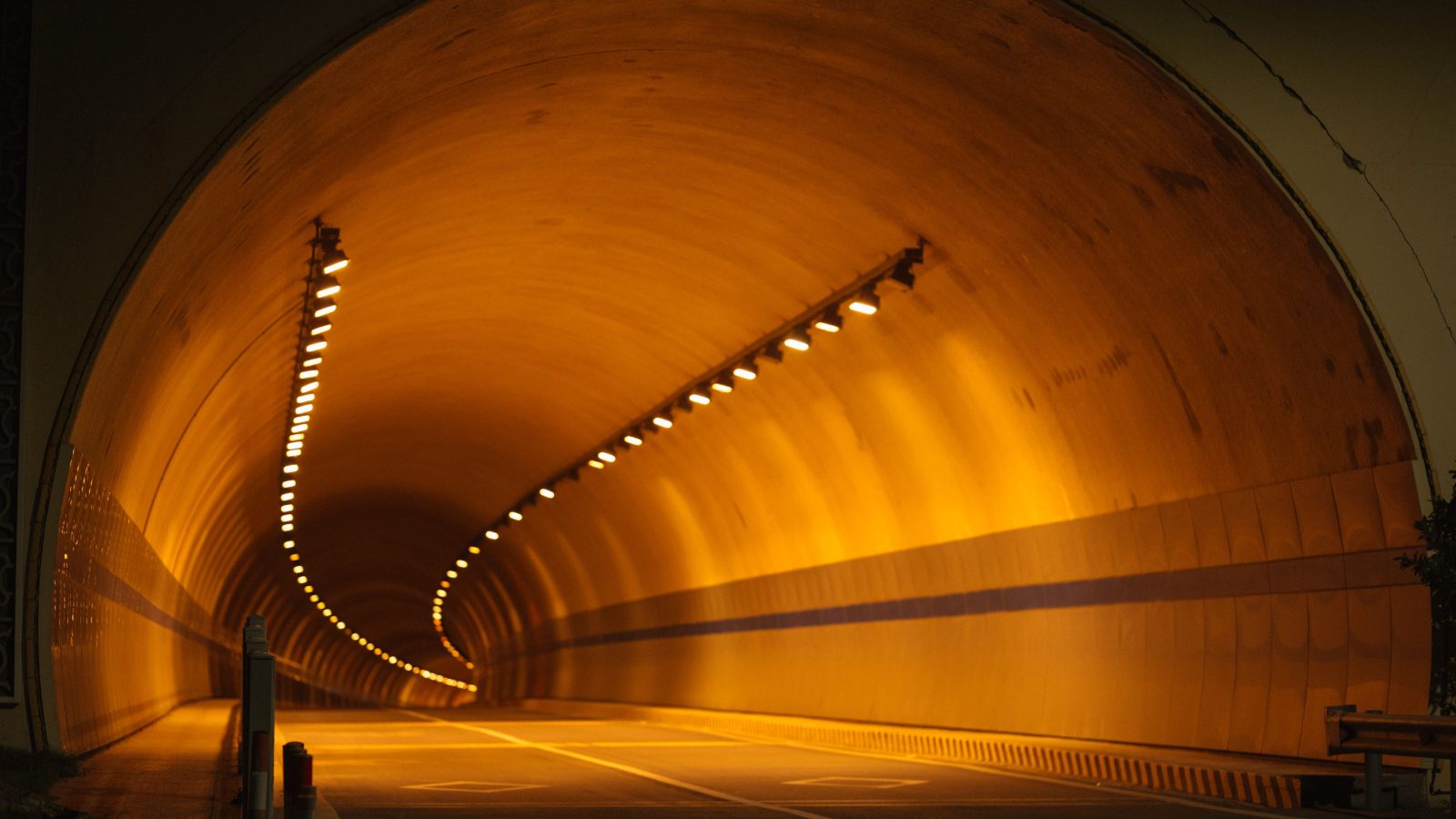
Near the middle of the tunnel Norway is blasting under the North Sea, drivers will one day slow into a roundabout cut from solid rock, about 250 meters beneath a small island. The engineers laying out the route worry about the long dark runs on either side of it, that half an hour of unchanging gray stone at speed will lull people toward sleep. Their answer is light. Working with the design consultancy Norconsult, the project plans to wash stretches of the tunnel in shifting color and turn parts of it over to artists, easing the closed-in feeling and making the minutes underground pass faster.
The tunnel is called Rogfast, short for the Rogaland fixed link, and when it opens in 2033 it will be the longest and deepest undersea road tunnel anywhere. Its twin bores run 26.7 kilometers between Randaberg, near Stavanger, and the municipality of Bokn, dropping to 392 meters below sea level at their lowest, close to 1,300 feet down. According to Norway’s Public Roads Administration, the crossing will cut about 40 minutes from the drive between Stavanger and Bergen and retire a ferry route that has long set the pace of travel on the coast. It is the first link in a decades-long plan to make the E39 highway ferry-free the whole way from Kristiansand to Trondheim.
The roundabout is there for Kvitsoy, Norway’s smallest municipality, a cluster of islands where roughly 550 people reach the mainland today only by boat. A spur will branch off the main tunnel and surface on the island, and the junction that ties it in, two roundabouts about 250 meters down, is billed as the deepest road junction on Earth. For a place that has always lived by the ferry timetable, it means a fixed road out at any hour.
Norway builds these the hard way, on purpose. Instead of sinking prefabricated tubes into a trench, crews drill and blast through bedrock, each round of explosives pushing the rock face forward five or six meters before it is bolted, sprayed, and sealed against the water. The country has practice: it already runs around 40 subsea road tunnels, more than anywhere else on Earth. To move faster, Rogfast is being carved from three points at once, north from Bokn, south from Randaberg, and down from Kvitsoy, with the headings set to meet under the fjord near the end of the decade.
The margins are exact. Norwegian rules require at least 50 meters of solid rock between the roadway and the seabed, the buffer that keeps the tunnel dry and stable under the weight above. “You are travelling through solid rock,” Oddvar Kaarmo, a project manager on Rogfast, told Life in Norway, describing what gives the tunnel its durability. In February, the first ventilation shaft broke through, a 211-meter chimney dropping straight into the ventilation hall beneath Kvitsoy.
Rogfast is expected to carry about 13,000 vehicles a day and to cost upward of 20 billion Norwegian kroner. The deepest part of the route will also be the one worth slowing down for: a run of rock lit in changing color, a roundabout no one has built this far down, and a permanent road home for a few hundred islanders who have spent their whole lives waiting on a boat.