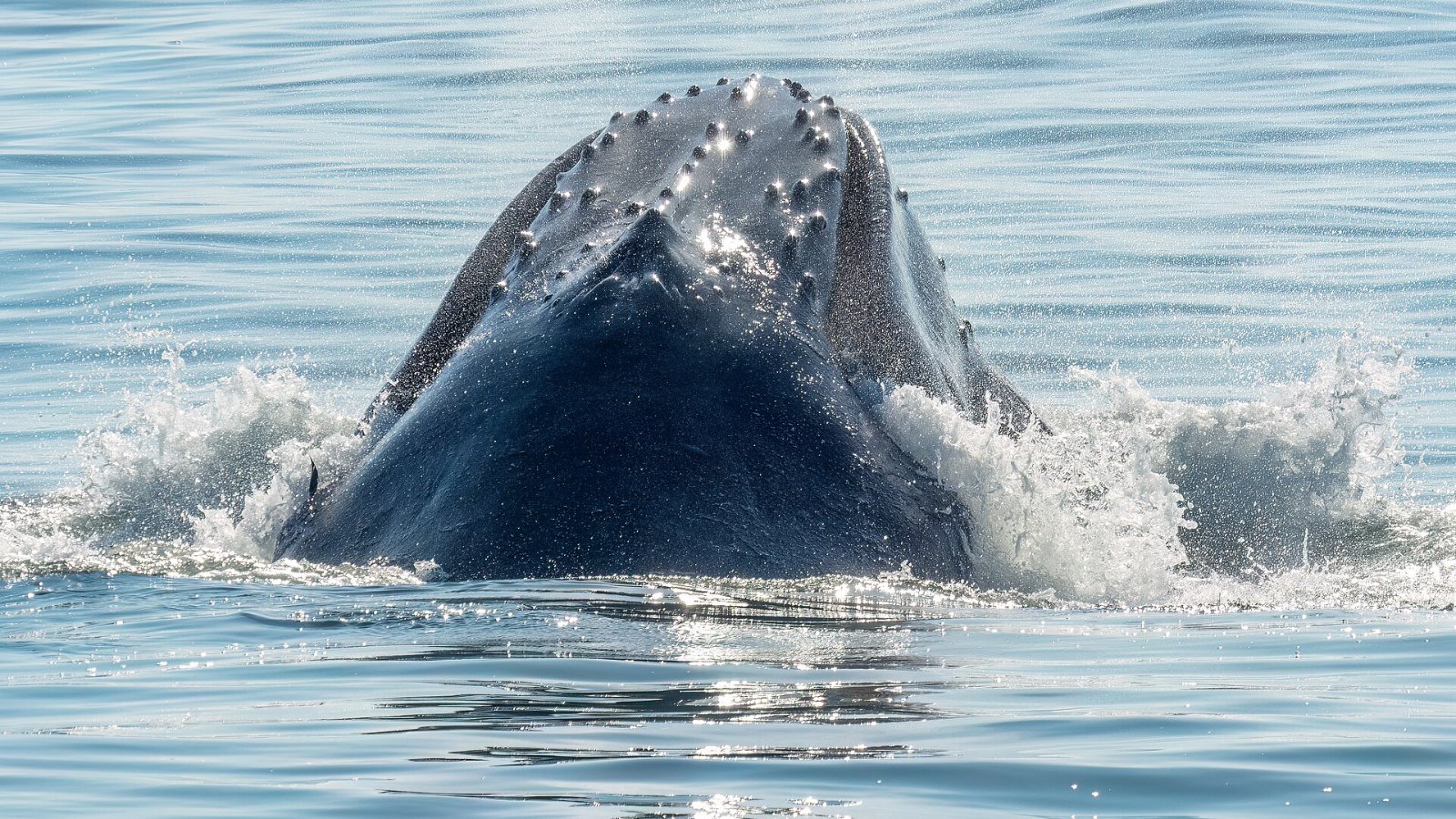
The Return of the Giants: Whales Are Filling the Southern Ocean Again
Scientists who have spent their careers around whales are hard to astonish. Then the research vessel Allankay came into the waters off the South Orkney Islands, near the tip of Antarctica, and the people aboard found themselves counting more than a hundred feeding whales in a single day, blows rising across the water from one edge of the horizon to the other.
“It’s amazing to see that kind of abundance of animals,” said Dr. Ted Cheeseman, a whale researcher at UC Santa Cruz who was on the expedition. “This is a world where most of these whales were killed.”
A century ago, this same stretch of ocean was one of the great killing grounds of commercial whaling, a business that took more than two million whales from the Southern Ocean before the world agreed to stop. The abundance the scientists are now describing is the sound of that loss being undone.
A hotspot, rediscovered
The survey, one of the longest ever carried out in the region, brought independent researchers into some of the least-studied water on the planet. What they found off Coronation Island, the largest of the South Orkneys, was not an empty polar wilderness. It was one of the busiest wildlife gatherings on Earth.
“We rediscovered, or are in the process of rediscovering and resharing with the world, the fact that the South Orkney Islands are one of the world’s great wildlife hotspots,” said Dr. Matthew Savoca of Stanford University’s Hopkins Marine Station, who was also aboard. In these waters, humpback whales lunge through thick clouds of krill while fin whales surface nearby, seabirds work the same swarms overhead, and penguins and seals move through it all.
The numbers are only part of it. Commercial hunting had driven humpbacks to the edge of extinction and, in doing so, wiped their culture from the ocean: the coordinated, learned ways they feed together. The expedition watched that culture come back, humpbacks blowing rings of bubbles to corral their prey, fin whales feeding in formation.
“We are the first generation getting to see the return of the fin whales, the return of the giants,” Savoca said.
Recovered, but still some ways to go
The recovery is not complete, though. The humpbacks are much of the way back, but the largest animal that has ever lived is still missing from the picture. “Blue whales are not even close to being recovered,” the scientists stressed, a reminder that some populations move slowly and that a comeback measured in decades can still have a long way to run.
There is a newer complication in the same water, too. Antarctic krill, the small shrimp-like animals the whales come here to eat, sit at the base of the entire Southern Ocean food web, and they have become a commercial catch, harvested by industrial vessels working the very grounds where the whales feed. The body that manages fishing around Antarctica currently weighs the effect of that fishing on penguins and seals, but its rules do not yet account for the whales. Filling that gap with hard data is a large part of why the scientists were there.
Showing the world what is there
The problem also looks unusually solvable. Savoca and Cheeseman have floated a straightforward idea: a voluntary buffer of roughly 30 kilometers around the South Orkney Islands where krill fishing would pause, modeled on the no-fishing zones that vessels have already agreed to keep around penguin colonies. It asks for cooperation rather than confrontation, and there is precedent for it working.
Whether that buffer happens or not, the whales are back in numbers no living scientist had seen here, and the evidence of it is now being gathered carefully enough to matter. For Cheeseman, that is the whole point. “All it really takes is us showing the world what there is,” he said, “and the protection will follow.” The showing has started. Off Coronation Island, on a clear day, you can see it from horizon to horizon.