The Fridge on the Corner: How Free Food Feeds Neighbors and Keeps Meals Out of Landfills
Dan Zauderer had seven slices of pizza and no good reason to eat them. He and his in-laws had already had plenty. He could have thrown the rest away. Instead he wrapped the slices, wrote the date on them, and carried them about a block from his apartment on New York’s Upper East Side to a refrigerator standing on the sidewalk, where anyone who needed a meal could take them.
By the next day, the pizza was gone.
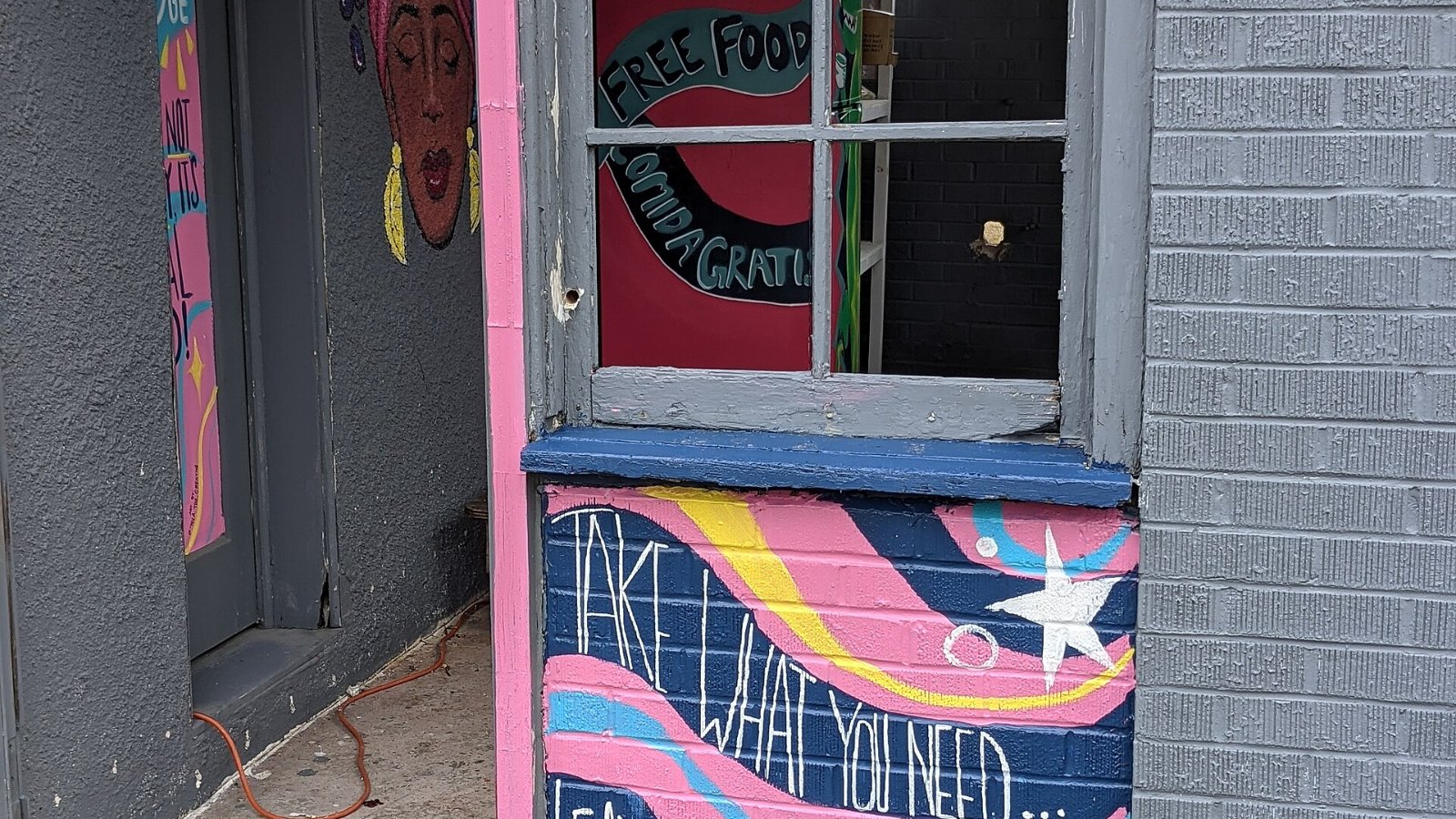
That refrigerator is one of hundreds like it around the country, plugged in on street corners and stocked by volunteers with whatever people can spare: prepared meals, groceries, leftovers with the date written on the wrap. They go by different names in different cities, freedges and friendly fridges and love fridges, and they do two plain and useful things at once. They feed people who are hungry, and they keep good food out of the trash.
From one fridge in the Bronx
Zauderer knows the model as well as anyone, because he helped build a piece of it. He was a middle-school teacher when the pandemic hit, trying to find a way to help students whose families could not always afford food. In September 2020 he set up his first fridge in the Bronx, the Mott Haven Fridge. It was so well used that he kept going, and he has since helped plug in seven more across the Bronx and Manhattan, including the one where his pizza went.
“It just blossomed into way more than I ever could have expected,” Zauderer, who now works full-time at Grassroots Grocery, a food-distribution nonprofit he co-founded, told Grist.
The fridges first appeared about a decade ago in a scattering of places around the world, then spread fast across the US after 2020, when supply chains were breaking and grocery bills were climbing. Many people assumed they were a pandemic improvisation that would fade. They didn’t. Nonprofits and neighborhood groups now keep them running in cities from Miami to Anchorage, Alaska.
The waste problem hiding in plain sight
The reason a fridge on the corner matters for more than one hungry afternoon is what would otherwise happen to the food. More than a third of everything grown and made to eat in the US gets thrown out, and most of it rots in landfills, releasing methane, a potent heat-trapping gas. Food waste accounts for as much as a tenth of the world’s greenhouse-gas emissions.
“There’s no solution to our climate problem that doesn’t also address food waste,” said Emily Broad Leib, who directs the Harvard Food Law and Policy Clinic.
Food banks do enormous good, but they are built for pallets of canned goods, not for the pizza slice and the half-loaf of bread and the single container of soup that turn up in ones and twos. Those small, perishable scraps are about 40 percent of the country’s food waste, and they are exactly what a fridge on the sidewalk handles well. “These are just a really elegant solution to that,” Broad Leib said.
There is a dignity to them, too. Nobody has to fill out a form or prove they qualify. “The whole point is dignified, anonymous access,” Zauderer said. “We’re not the arbiters of how much to take.”
Run on used fridges and volunteer hours
In Chicago, an artist named Eric Von Haynes co-founded a network called The Love Fridge in 2020. He now helps oversee more than 20 of them, each painted in loud colors and messages like “Free food for all,” kept clean and stocked by hundreds of volunteers. Thousands of pounds of food move through them every month. The group uses only secondhand refrigerators, and it runs two of them on solar panels.
The energy math holds up, even for a fridge drawing from a coal-heavy grid. One of those uses less electricity in a day than a single cell phone, said Dawn King, who studies food waste and policy at Brown University. “Is it worth using greenhouse gas emissions to plug in a refrigerator so people can eat food that otherwise would have gotten wasted?” she asked. “Hell yes it is.”
The work is not frictionless. Fridges need cleaning and repair, they need to be kept full, and now and then something goes sideways, like the Austin fridge that briefly vanished when someone borrowed it to keep beer cold during South by Southwest. Mostly, though, people treat them exactly as intended. Ernst Bertone Oehninger, who helped start what may have been the country’s first freedge in Davis, California, in 2014, has a simple rule about what to leave. “Think about a half-eaten burger. That’s a no-go,” he said. “But this is very rare. Most people bring good leftovers.” Like Zauderer’s pizza, which someone was glad to have, and which was not there the next morning.