
A Fossilized Dinosaur Meal Holds a New Clue to Bird Survival
A small rock collected in eastern Montana has turned out to preserve the remains of a dinosaur’s meal. The specimen is a coprolite, or fossilized dung. Inside it, scientists found feathers, fish scales and bones from an extinct bird that once hunted in the water.
David DeMar Jr. found the nodule in 2016 while searching the Hell Creek Formation for fish fossils. He is a University of Washington research scientist and collections manager for the Burke Museum’s Hell Creek Project. Looking at its surface with a hand lens, he saw what he called a “tiny fossil feather.” It was the first feather recovered from the formation after more than a century of fossil collecting there.
Researchers used micro-CT imaging to inspect the rock without taking it apart. The scan revealed several feathers, gar scales and leg bones belonging to a hesperornithiform, a mostly flightless diving bird. The bones and feathers appear to come from the same animal. That makes them the first identified feathers from this group, according to the team.
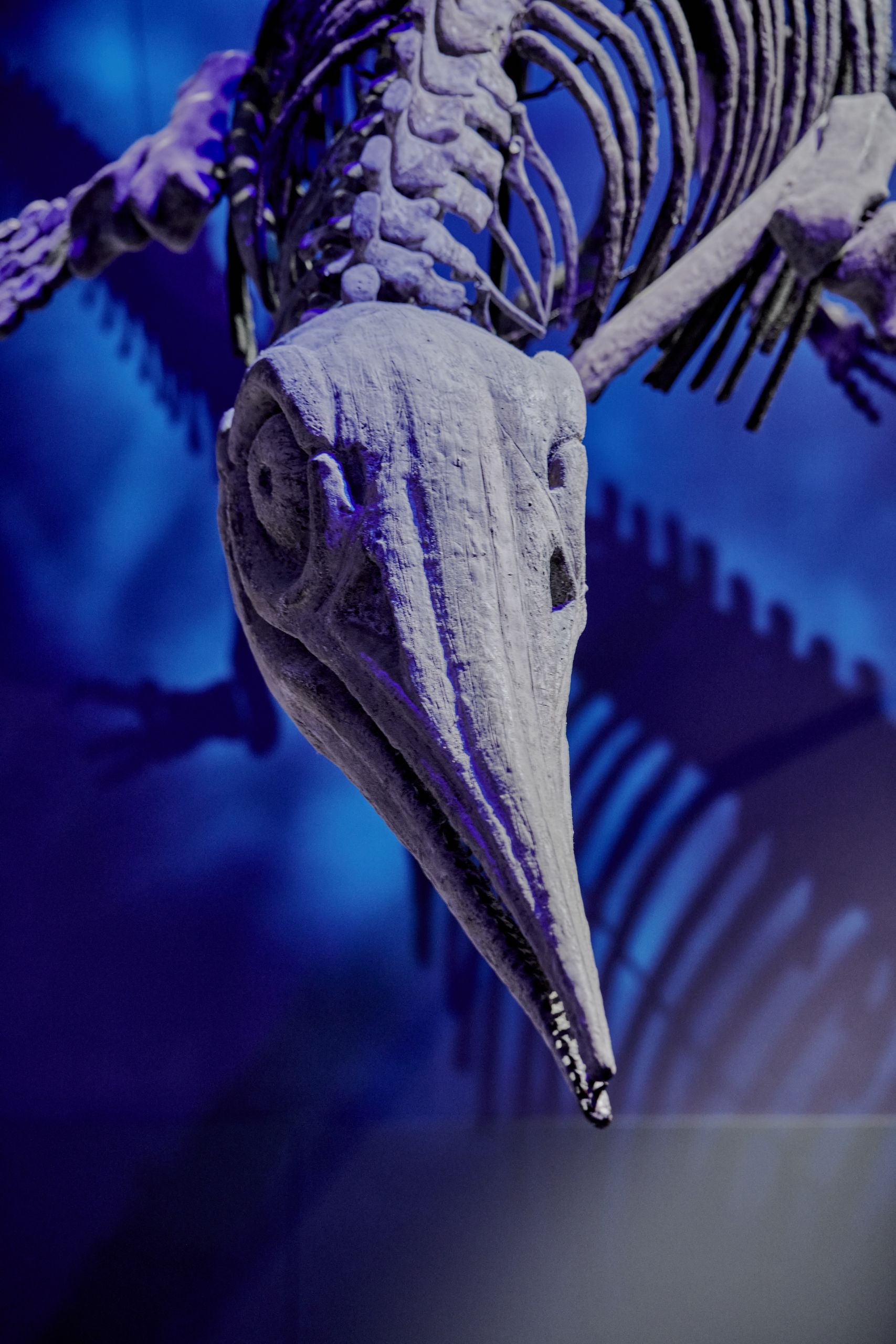
Hesperornithiforms were aquatic birds with a lifestyle closer to a loon than a songbird. They were close relatives of Neornithes, the group that includes every living bird, but they did not survive the extinction at the end of the Cretaceous. That contrast gives the find some weight beyond its unusual setting.
About 66 million years ago, the asteroid impact killed roughly three-quarters of life on Earth. Most bird lineages disappeared alongside the non-avian dinosaurs. Scientists have long asked why Neornithes endured when other birds did not. One proposal has been that water-rich habitats offered protection. The extinction of these diving birds shows that habitat alone cannot settle the question.
The feathers provide another possible part of the answer. Some are smooth and suited to shedding water; others have a softer structure more typical of earlier feathered dinosaurs. Body feathers help retain heat, which would have mattered during the cold period after the impact. Jingmai O’Connor, lead author of the study and an associate curator at Chicago’s Field Museum, said the specimen could help address a major paleontological question. The work does not show that feather type decided which birds survived, but it gives researchers a specimen with which to test that possibility.
The discovery also changes where paleontologists may look for evidence. Fossilized dung has not usually been searched for feathers, and O’Connor hopes other coprolites will be examined. The Montana specimen is on permanent display at Seattle’s Burke Museum. Its contents preserve a bird, a fish and a predator’s meal in the same small piece of rock.